

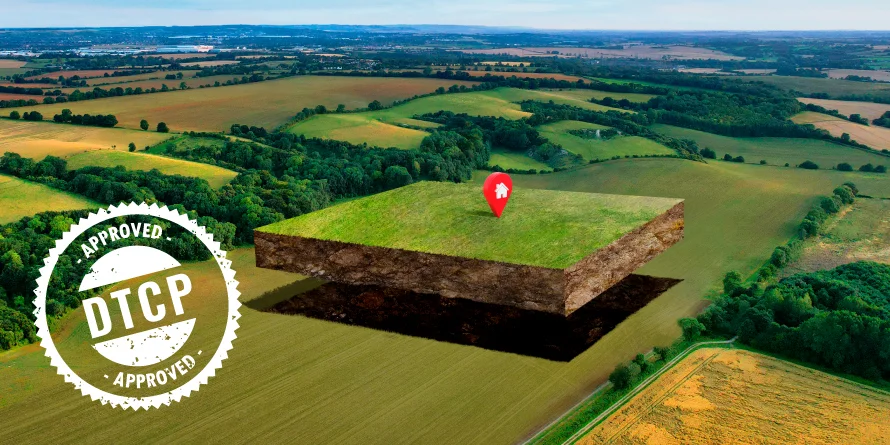
When considering purchasing land in Hosur, Tamil Nadu, one of the most critical factors to evaluate is whether the property has been approved by the Directorate of Town and Country Planning (DTCP). DTCP approval signifies that the land has undergone scrutiny to ensure compliance with urban planning regulations, zoning laws, and infrastructure standards. Opting for non-DTCP approved land may seem financially appealing due to lower prices, but it carries significant legal risks that can jeopardize your investment.
Understanding DTCP Approval in Hosur
DTCP approval is a mandatory process for land developments in Tamil Nadu, particularly in urban and semi-urban areas like Hosur. This approval ensures that the land layout adheres to the state’s master plan, zoning regulations, and infrastructure requirements. A DTCP-approved layout typically includes:
Proper Road Access: Ensuring connectivity and accessibility.
Adequate Infrastructure: Provision for water supply, sewage systems, and electricity.
Compliance with Zoning Laws: Land designated for residential, commercial, or mixed-use purposes as per the master plan.
Without this approval, a property may not meet the necessary legal and infrastructural standards, leading to potential complications for buyers.
Legal Risks of Non-DTCP Approved Land
1. Lack of Legal Title and Ownership Disputes
Non-DTCP approved lands often lack clear legal titles, making it challenging to verify ownership. This ambiguity can lead to disputes with previous owners, local authorities, or other stakeholders. In some cases, the land may be encroached upon or under litigation, posing a significant risk to potential buyers.
2. Absence of Basic Infrastructure
Properties without DTCP approval frequently lack essential infrastructure such as proper roads, drainage systems, water supply, and electricity connections. This absence can lead to increased living costs and inconvenience for residents. Moreover, obtaining utility connections from service providers may be difficult without official approvals.
3. Challenges in Obtaining Bank Loans
Financial institutions are generally hesitant to finance properties lacking DTCP approval due to the associated risks. Buyers may find it challenging to secure loans for such properties, leading to the necessity for full cash payments. This limitation can be a significant hurdle for many prospective buyers.
4. Potential for Demolition or Legal Action
Engaging in construction on non-DTCP approved land can lead to legal actions, including demolition of structures. Authorities may take stringent measures against unauthorized constructions, resulting in the loss of investment and legal complications for property owners.
5. Uncertainty in Property Value Appreciation
The absence of DTCP approval can hinder the property’s potential for value appreciation. Without proper planning and infrastructure, the land may not develop as anticipated, leading to stagnant or declining property values over time.
Case Studies Highlighting the Risks
Illegal Encroachments: Instances of illegal encroachments on government land in Hosur have been reported, where unauthorized constructions were demolished by authorities. Such actions highlight the risks associated with purchasing non-DTCP approved land, as buyers may unknowingly invest in properties that are subject to legal actions
Unauthorized Developments: In some cases, developers have initiated unauthorized plotting and construction in violation of urban planning regulations. These developments were subsequently demolished by the Department of Town and Country Planning, underscoring the importance of ensuring DTCP approval before purchasing land
How to Verify DTCP Approval in Hosur
To mitigate the risks associated with non-DTCP approved land, prospective buyers should take the following steps:
Check DTCP Approval Status: Verify the DTCP approval status of the land by consulting the official DTCP website or contacting the local DTCP office.
Review Land Documents: Ensure that the land documents, including the sale deed, patta, and encumbrance certificate, are in order and reflect the DTCP approval.
Consult Legal Experts: Engage with legal professionals specializing in property laws to review the documentation and provide guidance on the legitimacy of the land.
Assess Infrastructure Availability: Evaluate the availability of basic infrastructure such as roads, water supply, and electricity connections to ensure the land’s suitability for development.
Conclusion
While non-DTCP approved land in Hosur may appear to be a cost-effective investment, the associated legal risks can outweigh the initial savings. Ensuring that a property has DTCP approval is crucial for securing a legally sound and financially viable investment. By conducting thorough due diligence and consulting with professionals, buyers can safeguard themselves against potential legal complications and make informed decisions in their property investments.
If you require assistance in verifying the DTCP approval status of a property in Hosur or need legal guidance, feel free to reach out for expert support.