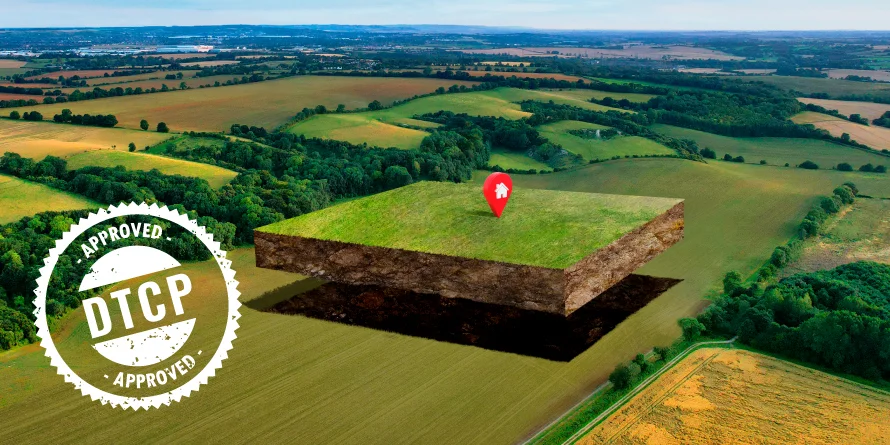
DTCP Approval In Chengalpattu

What is DTCP ?

Definition & Legal Basis

The Directorate of Town & Country Planning (DTCP) was constituted by the Government of Tamil Nadu under the Tamil Nadu Town & Country Planning Act, 1971 (Act 35 of 1972) which repealed the earlier Town Planning Act 1920.
The Act states its objective as: “An Act to provide for planning the development and use of rural and urban land in the State of Tamil Nadu and for purposes connected therewith.”
Under the Act, DTCP functions under the Housing & Urban Development Department of the state.

Local Body Approval
Local Body Approval

Jurisdiction in Tamil Nadu, with Focus on Chengalpattu

In Tamil Nadu, the DTCP generally has jurisdiction over the entire State except where a separate Metropolitan or Development Authority is created (for example the Chennai Metropolitan Development Authority for Chennai).
In the context of the Chengalpattu / Chengalpattu District region, development authority matters may also involve the Chengalpattu New Town Development Authority (HNTDA) or other local town planning / development authorities, depending on whether the site falls within their boundaries. (You would need to check the latest notification / master plan to establish which authority holds primary jurisdiction.)

When & Why DTCP Approval is Mandatory

When Is It Mandatory

  •  

Why It’s Important

  •  

Types of Projects / Land Uses That Require DTCP Approval

Risks / Consequences of Proceeding Without DTCP Approval

Distinction: DTCP Approval vs Panchayat Approval vs Municipal Approvals

Local Body Approval

Frequently Asked Questions

1. What is the difference between DTCP approval and local municipal / panchayat approval?

DTCP approval is state-level planning authority sanction under the Town & Country Planning Act; municipal/panchayat approvals are local body permissions. DTCP sanction provides stronger legal cover and is recognised by banks; panchayat alone may not suffice for plots offered for sale.

2. How much time does it take in Chengalpattu?

Time varies depending on completeness of documentation, infrastructure readiness, local authority workload. Some sources say DTCP layout approvals in TN can take a few months; Chengalpattu specific timeline should be confirmed with local office.

3. What are the NOCs needed?

Typical NOCs include utilities (water, electricity), drainage/road connection, local municipal or panchayat NOC where applicable, environmental clearance if near special zones.

4. Can I build immediately after getting DTCP layout approval?

Not always — layout approval allows plot subdivision and infrastructure provision; for building you may still need building plan approval (either by DTCP/local planning authority) and municipal/panchayat building permission, depending on the zone.

5.What happens if DTCP rejects the application?

ou’ll receive a communication stating reasons for rejection or required modifications (infrastructure shortfall, zoning conflict, missing documents). You can rectify and resubmit, or appeal as provided under the Act.

Get the approvals you need, faster.

Connect with Approval Guru today and simplify your approval process in no time.

DTCP Approval

Benefits of Having DTCP Approval

  • Legal Security – The layout is sanctioned by planning authority; fewer chances of future dispute or invalidation.

  • Bank loan eligibility – Banks are more comfortable sanctioning plot/house loans if layout is DTCP-approved.

  • Infrastructure assurance – Approved layouts generally have road, drainage, open space provisions as per norms.

  • Better resale value – Buyers trust sanctioned layouts; resale market responds better.

Common Mistakes \ What to Watch Out For

1.Buying a plot without verifying the DTCP layout approval status (or relying only on a panchayat approval).
2.Land in a “non-plan” or not yet notified area, or land with change-of-land-use pending (agricultural to residential).
3.Incomplete documentation (missing EC, title chain, NOCs, survey sketch) delaying approval or causing rejection.