

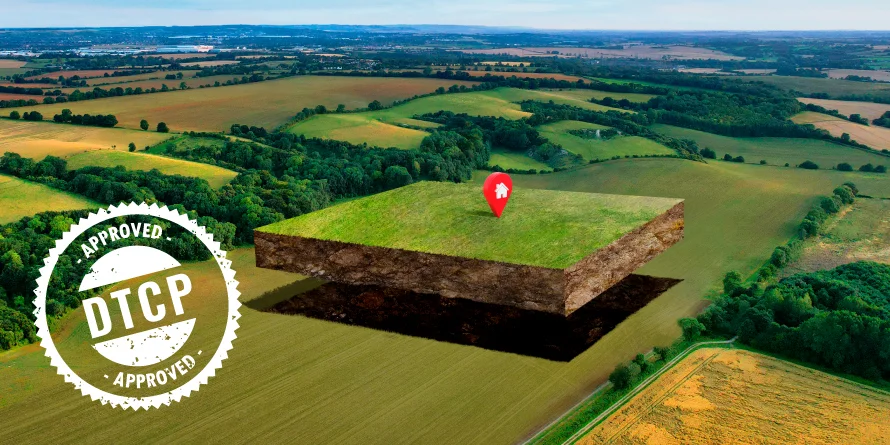
When buyers, developers, and banks see the phrase DTCP Approval in salem, they’re seeing more than a stamp on a paper — they’re seeing certainty. In fast-growing suburbs around Salem, that certainty translates directly into higher land values. This blog explains why DTCP approval matters, how it reduces risk, and the practical ways it increases demand and price for land in emerging neighbourhoods.
What “DTCP Approval in salem” means for a plot of land
DTCP approval refers to permission from the Directorate of Town and Country Planning (DTCP) for layouts, sub-divisions, and certain land-use changes. For landowners and buyers in and around Salem, a property with DTCP Approval in salem signals that the layout conforms to statutory planning norms — roads, open spaces, drainage, and basic services are laid out according to rules. That formal compliance is what moves a property from speculative to bankable and saleable.
Immediate financial benefits: liquidity and better financing
Land that carries DTCP Approval in salem is easier to sell. Buyers (especially from other cities) and real estate investors prefer approved plots because they can be shown documents that prove legal compliance. This increases the pool of potential buyers and speeds up transactions — simple supply-and-demand dynamics that push prices up.
Banks and NBFCs are far more likely to lend on approved projects. When a lending institution sees DTCP sign-off, the plot becomes mortgageable. Availability of loans increases buyer purchasing power, which raises effective demand and, consequently, land values.
Risk reduction — the single biggest value driver
Two things kill land value: legal uncertainty and the risk of demolition or non-regularisation. DTCP approval reduces both. Buyers aren’t buying a promise; they’re buying documentation that the local planning authority has vetted the layout and basic civic provisions. That reduces the perceived risk premium buyers factor into offers. Lower risk means higher willingness to pay — the easiest path to higher land prices.
Better infrastructure and planned development
DTCP guidelines require provision for roads, drainage, and public spaces in approved layouts. While the DTCP itself may not build these, approved layouts are easier to have taken up by municipal bodies for infrastructure provisioning. Developers also prefer to buy and develop DTCP-approved plots because the basic planning has been done, which reduces their execution costs. Planned infrastructure and credible developer activity make the neighbourhood more attractive, and land values in those suburbs climb as a result.
Market confidence and resale premium
A resale market builds faster where documents are clean. DTCP Approval in salem works as a trust signal for second-hand buyers and brokers. Plots with approval command a resale premium because they’re easier to transfer, have documented boundaries, and typically come with a cleaner chain of title. In hot suburbs, that resale premium can be substantial — a direct uplift in realised value for sellers.
Attracts responsible development and better buyers
Developers and serious homebuyers often avoid speculative pockets because construction and registration can become legally fraught. Conversely, areas where many plots carry DTCP Approval in salem attract formal developers who build planned colonies, apartments, or gated communities. Those projects bring higher-income end-users and organized retail/services, which both uplift the neighbourhood’s desirability and land prices.
Faster approvals for future projects
When a developer or investor proposes a new project inside an area that already has multiple DTCP-approved layouts, the perception of regulatory friendliness increases. Authorities are likelier to process subsequent clearances more predictably. This cumulative effect — one approval leading to more formal development — creates momentum. Landowners ride that wave as buyers anticipate further appreciation.
How sellers can capitalise on DTCP approval
Showcase documents clearly: When marketing a plot, emphasise “DTCP Approval in salem” in listings and brochures. Buyers search for that phrase; it directly improves lead quality.
Price with a premium: Approved plots are worth more — reflect that in pricing but be realistic relative to comparable approved parcels nearby.
Target financed buyers: Highlight bankability to attract buyers who need loans; that expands the buyer pool and shortens sale time.
Bundle value with utilities: If the approved layout already has water, electricity access, or a municipal connection, present those facts prominently — they compound the approval’s value.
Caveats and realistic expectations
DTCP approval is a powerful value driver, but it’s not the only factor. Connectivity (roads to city centre), proximity to employment hubs, public transport, schools, and overall market sentiment also play major roles. An approved plot in a poorly connected area will still underperform an approved plot in a well-connected suburb. Also, ensure approvals are genuine and current — buyers should always verify the DTCP sanction letter and layout plan against official records.
Conclusion
In Salem’s expanding suburbs, DTCP Approval in salem acts like a quality seal that converts speculative land into a marketable asset. It reduces legal risk, unlocks finance, attracts responsible developers, and signals to buyers that the neighbourhood is being planned — all of which raise demand and push land prices higher. For landowners and sellers, obtaining and showcasing DTCP approval is one of the most effective, practical steps to increase a property’s market value and sell with confidence.
If you’d like, I can draft a short property listing or an SEO-friendly classified ad that highlights DTCP Approval in salem and targets buyers who prefer financed purchases.